
How to Pick the Right Microwave Size and Wattage for Your Household

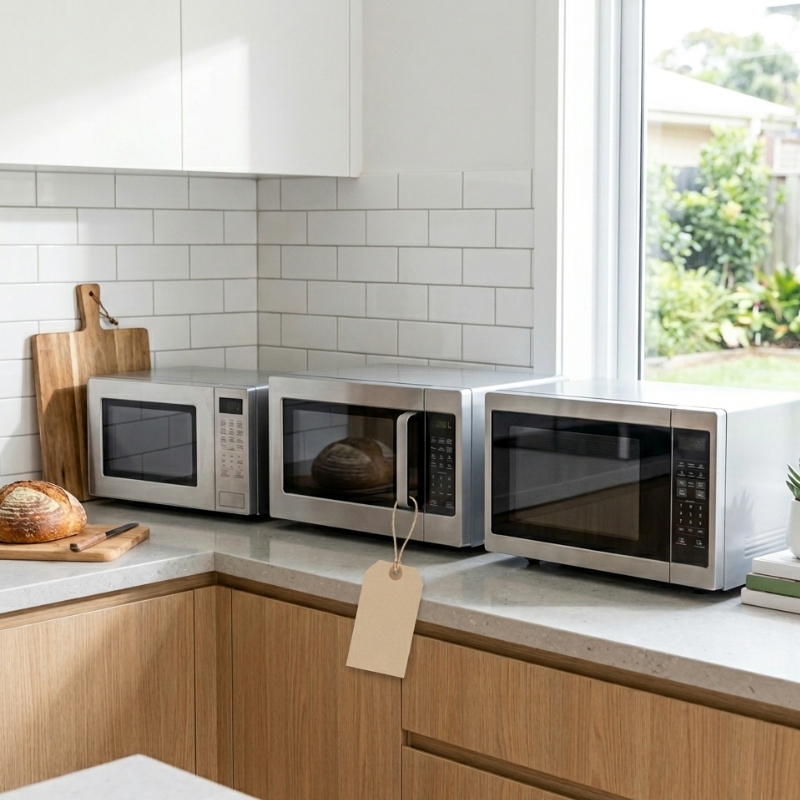
A quick scroll through any appliance store will reveal dozens of microwave oven models, from compact 15-litre units to hulking 50-litre combi ovens pushing 1,500 watts. While choice is great, it also leads to confusion. Do you really need a high-powered beast in a one-bedroom flat, or will a budget-friendly mid-range model cook just as well? And how do you balance internal capacity with the bench space available in most Australian kitchens?
This guide breaks down the practical stuff you actually need to know—no jargon, no hard sell. We’ll explain the difference between size and capacity, translate wattage into real-world cooking times, and show how to line these specs up with apartments, share-houses and larger family homes. If you’d like to eyeball specific models while you read, feel free to browse our range of microwaves and compare the numbers against the tips below.
Why Capacity and Power Levels Matter More Than Model Names
Many shoppers focus on brand or price first, yet the two specifications that impact day-to-day convenience most are capacity (litres) and wattage (watts).
• Capacity determines what fits inside—big lasagne trays, tall smoothie jugs, or just a single dinner plate.
• Wattage affects how fast and how evenly food heats. Higher watts generally mean shorter cook times, but they can also spike energy consumption if you overdo it.
Getting either spec wrong creates common headaches:
• A tiny cavity won’t fit that occasional casserole dish you forgot to measure.
• A low-powered microwave can leave the centre of frozen meals stone cold while the edges are bubbling.
• An oversized or overpowered unit wastes bench space and electricity in a small household.
In other words, capacity and power are the Goldilocks variables—aim for “just right” rather than “biggest” or “cheapest”.
Understanding Litres vs Internal Dimensions
Microwave “size” is advertised in litres, but that volume isn’t always intuitive. Two models with the same litre figure can differ in shape, turntable diameter and usable height.
The litre rating
Manufacturers calculate capacity by the volume of the interior cavity. While that seems straightforward, it doesn’t account for:
• The central hub of the turntable takes up floor space.
• Rounded corners that reduce square dish capacity.
• Sloping control panel housings that trim internal height.
Practical tip: When in-store, open the door and place the largest dish or container you regularly use inside. If shopping online, check the listed internal width, depth and height—not just litres.
External footprint
Apartments and share-houses often battle for every centimetre of bench space. Be sure to compare the external width and depth against the cavity size. A well-designed 25-litre microwave with slim walls can sometimes occupy the same footprint as a bulkier 20-litre model.
Turntable vs flatbed
Flatbed designs replace the rotating glass plate with hidden stirrers, freeing up a few extra litres of usable space and allowing rectangular dishes. They also reduce height clearance issues because you’re not restricted by a spindle. Worth considering if the wattage and price stack up.
Wattage Explained: What Those Numbers Mean for Cooking Speed
Microwave power ratings in Australia usually range from 700 W to 1,500 W. Higher numbers mean the magnetron delivers more energy more quickly. Sounds simple, yet wattage interacts with cooking habits, container choice and the type of food you heat.
• 700 W–800 W: Common in budget or compact models. Adequate for reheating leftovers, defrosting mince and making mug cakes, but you’ll wait longer for large frozen meals.
• 900 W–1,050 W: The mid-range sweet spot. Provides faster, more even heating without blowing the circuit in older rental properties.
• 1,100 W–1,500 W: High-powered, often found in convection or inverter combos. Great for big families or those who regularly cook full meals in the microwave.
If you’d like a deeper dive into how wattage affects cook times, internal distribution and energy use, see our related explainer on the real meaning of wattage.
Energy-use perspective
More watts can mean higher power draw, but shorter cooking cycles partly offset that. According to the Australian Government’s Energy Rating Guide, total energy consumed depends on both power and duration. Choosing the right wattage, then using appropriate power settings (50 %, 70 %, etc.) can trim power bills without compromising speed.
Matching Household Types to Microwave Specs
Let’s put these numbers into context. The table below matches common Australian living situations to capacity, wattage and daily use cases.
| Household Type | Recommended Capacity | Recommended Wattage | Why It Makes Sense |
| Apartment / Solo | 15 – 23 L | 700 – 900 W | Fits single dinner plates, meal-prep containers; lower wattage plugs into older units without tripping breakers. |
| Share-House (3–4 people) | 25 – 30 L | 900 – 1,050 W | Handles mixed use at odd hours—late-night noodles, reheating leftovers in large bowls, defrosting bulk meat packs. |
| Large Family (5+ people) | 32 – 50 L | 1,000 – 1,300 W | Room for casserole dishes, tall baby-bottle sterilisers, stack steaming; high wattage speeds batch cooking. |
| Entertainer / Home Chef | 40 – 50 L (Convection or Inverter combo) | 1,200 – 1,500 W | Bakes, grills, and competes with full ovens. Useful for frequent dinner parties or secondary cooking zone. |
The numbers aren’t hard rules. They’re starting points. For example, a couple who loves meal prep might step up to a 30-litre, 1,000-watt model to reheat bulk recipes quickly. Conversely, a family that mainly uses the microwave for baby bottles may prioritise height clearance over litre capacity.
Space and Ventilation Considerations in Aussie Kitchens
Even the perfect size and wattage can become a headache if the microwave doesn’t physically fit—or overheats because it’s wedged into a tight alcove.
• Bench depth: Standard Australian benchtops are roughly 600 mm deep. Check the microwave’s external depth, then add at least 50 mm clearance behind for ventilation cables and plugs.
• Overhead cupboards: If you’re placing the unit beneath cabinets, verify heat clearance to prevent steam damage to laminates.
• Built-in niches: Some rentals include a fixed shelf above the oven. Measure, then look for front-venting models or dedicated built-ins.
• Door swing: Full-sized units can have wider doors that bump into adjacent appliances or fridge doors. Take a quick mock-swing with a tape measure.
Common Mistakes to Avoid
- Going “max spec” for prestige. Ultra-high wattage can scorch delicate foods if you’re not careful, and large cavities slow down steam build-up for veggies.
- Ignoring power settings. A 1,200-watt microwave used only on HIGH is less versatile than a 900-watt model with a savvy user who toggles 50 % and 70 % settings for gentle reheats.
- Forgetting internal height. Some 30-litre models are wide but shallow—great for plates, terrible for tall jugs or bottle sterilisers.
- Skipping turntable diameter checks. Large dinner plates (28–30 cm) can overhang in sub-25-litre cavities, causing scraping noises or uneven heating.
- Overlooking future needs. Couples planning a family or keen on weekly meal prep might outgrow a compact unit within a year.
Questions to Ask Yourself Before Deciding
• How many full plates or containers will you heat at once?
• Do you regularly cook raw ingredients (veggies, fish) or just reheat?
• Is bench space more valuable than speed?
• Will the microwave double as a secondary oven for holidays or big gatherings?
• Does the rental property have older wiring that struggles with kettles and toasters operating simultaneously?
Answering these prompts clarifies whether capacity, wattage or footprint should be your top priority.
Frequently Asked Questions
1. Is a higher wattage always better?
Not necessarily. Higher wattage means faster cooking, but only if you use it wisely. For small portions or delicate foods, 700 – 900 W on a mid-power setting can be gentler and prevent rubbery textures.
2. Can a 20-litre microwave fit a standard dinner plate?
Most 20-litre units fit plates up to about 26 cm in diameter. Measure your largest plates—their rim-to-rim width may surprise you—and compare this with the model’s turntable spec.
3. Will a large microwave chew through more electricity?
A bigger cavity doesn’t automatically equal higher energy use. Total power consumption centres on wattage and run-time. Using appropriate power levels, covering food and avoiding unnecessary minutes makes a bigger difference.
4. What’s the benefit of inverter technology in mid-sized units?
Inverter microwaves deliver continuous, variable power rather than switching on and off. This helps food heat more evenly—handy if you’re reheating mixed meals or thawing meat without cooking the edges.
5. How much clearance does my microwave need for ventilation?
A general rule is at least 5 cm on each side and 10 cm at the back, but always follow the manufacturer’s manual. Good airflow prevents overheating and prolongs magnetron life.
Wrapping Up
Choosing the right microwave is mostly a balancing act between capacity, wattage and the realities of your kitchen space. Nail those three factors, and brand bells and whistles become icing rather than the whole cake. If you’re in doubt, start with what you cook most often, match it to the table above, then cross-check dimensions against your bench. With a little prep, you’ll avoid buyer’s remorse and enjoy faster, safer heating for years to come.