
Air Fryer vs Conventional Oven: How Much Energy Can You Really Save in an Aussie Kitchen?

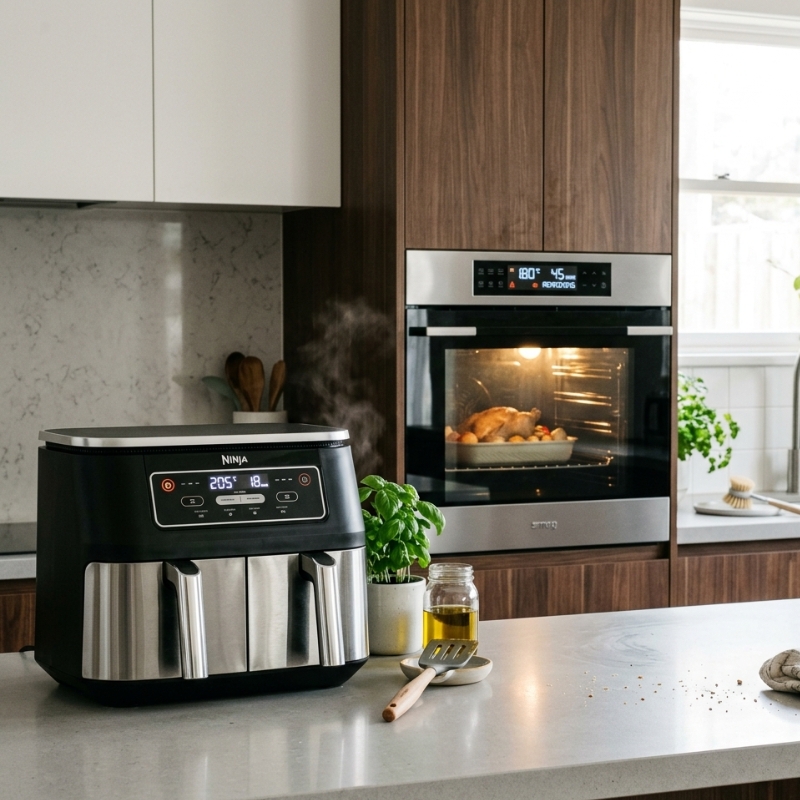
Australians have become masters at juggling rising energy costs with a love of home-cooked meals. One question keeps popping up in forums and dinner-table chats alike: Does an air fryer genuinely use less power than a traditional oven, or is it simply the latest gadget on the bench? Below we unpack real-world wattages, typical cooking times and the sneaky variables that nudge your electricity bill up or down. If you decide an air fryer is the right move after reading, you can always browse our range of air fryers for models that fit your household. First, let’s see what the numbers actually say.
Why Energy Use Matters More Than Ever in Australian Homes
Electricity prices have risen steadily across most states, and the Australian Energy Regulator’s default market offer jump in 2023 was a sharp reminder. While solar uptake is strong, not every rental or suburban roof can host panels, so the quickest controllable cost lever remains using less electricity per meal.
Beyond the bill shock, energy efficiency intersects with:
• Environmental impact: Every saved kilowatt-hour (kWh) reduces demand on coal and gas-fired generation still feeding the grid.
• Summer comfort: appliances that heat the kitchen force air conditioners to work harder.
• Appliance lifespan: shorter, lower-temperature cooking cycles can reduce wear on heating elements and seals.
Given those benefits, it is no surprise that bench-top gadgets promising “crispy results with up to 80 percent less energy” have captured hearts and hashtags. Marketing claims, however, can be slippery. Let’s ground the conversation in wattage, kWh and a little basic maths.
Quick Refresher: Wattage, kWh and What They Mean on Your Bill
Wattage is the rate of energy an appliance draws when running. Your quarterly bill, on the other hand, is measured in kilowatt-hours (1 kWh = 1,000 watts used for one hour).
Example:
• A 1,800-watt air fryer running for 20 minutes (0.33 h) uses: 1.8 kW × 0.33 h ≈ 0.6 kWh.
• If your tariff is 30 c/kWh, that cook costs roughly 18 c.
Conventional 60 cm electric ovens usually sit between 2,000 – 4,000 watts, plus 10 minutes of pre-heat time at full draw. They are also larger, which means excess space to heat. Airtight seals and better insulation in newer models can help, but capacity still matters.
To run your own comparisons, the free Australian Energy Rating calculator lets you plug in appliance wattage and usage time. We will use average figures below, but real tariffs vary by state, provider and time-of-use period.
Typical Power Draw: Bench-top Air Fryers vs 60 cm Electric Ovens
Average wattage ranges
• Entry-level 3 L basket air fryers: 1,400 – 1,500 W
• Mid-size 5 L – 7 L models: 1,700 – 1,900 W
• Dual-zone or oven-style air fryers: 2,000 W+
By contrast, a standard electric oven on fan-forced mode often draws:
• 2,000 W at low temperature bakes (160 °C)
• 2,400 – 3,000 W at 180 – 200 °C roasts
• 3,400 W+ at 220 °C pizza or bread settings
Gas ovens do not draw as many electrical watts for heating, but their gas burners still cost money, and fan or ignition systems add a small electricity load.
Pre-heat requirements
Bench-top air fryers reach target temperature in two to four minutes thanks to smaller chambers and powerful fans. Conventional ovens need eight to twelve minutes, especially in winter when the ambient kitchen air is cooler. Those minutes largely run at maximum wattage and count toward your bill even before food goes in.
Side-By-Side Cooking Test: Five Everyday Meals Compared
Below is a simplified comparison using typical Australian portion sizes. We assume a 1,800 W mid-size air fryer and a 2,400 W fan-forced oven, both on a flat 30 c/kWh tariff. Cooking times include average pre-heat where relevant.
| Meal | Avg serve size | Air fryer time & kWh | Oven time & kWh | Potential saving |
| Frozen chips | 600 g | 18 min, ~0.54 kWh | 30 min, ~1.22 kWh | ~68 c vs ~37 c → 31 c saved |
| Chicken thighs (4 pcs) | 700 g | 22 min, ~0.66 kWh | 40 min, ~1.60 kWh | ~48 c saved |
| Frozen meat pies (2) | 400 g | 17 min, ~0.51 kWh | 35 min, ~1.42 kWh | ~27 c saved |
| Roast vegetables | 800 g mixed | 25 min, ~0.75 kWh | 45 min, ~1.80 kWh | ~32 c saved |
| Reheating pizza slices | 3 slices | 6 min, ~0.18 kWh | 12 min, ~0.48 kWh | ~9 c saved |
The table shows clear kWh differences that scale with cooking time. Halving energy use per meal does not sound like much on one bill, yet multiply by weekday dinners and weekend snacks, and the savings are noticeable across a year.
Why is the table still approximate
• Wattages vary between specific models.
• Dense or watery foods like lasagne absorb heat differently.
• Opening the door or basket mid-cook lets heat escape, stretching runtime.
• Tariffs change by state and can be higher in peak periods.
Use the numbers as a guide, not gospel.
Real-World Factors That Shift the Numbers
Even the best comparison tables cannot capture every variable. Keep these influences in mind:
- Batch size: Air fryers suit one or two shelves of food. Full family roasts or multiple trays still fit better in an oven, and doing back-to-back air-fry cycles may erase savings.
- Insulation and seals: A new, well-sealed oven can rival an older, cheaper air fryer in efficiency. Worn door gaskets leak heat fast.
- Kitchen temperature: In colder regions, winter ambient air makes pre-heating longer. Conversely, a hot Queensland summer may tilt the advantage further to air fryers, because they blast less excess heat into the room.
- Moisture content: Foods with high water content take more energy to drive off steam. Air fryers circulate air rapidly, shortening this process, but differences shrink for slow, low-temp bakes like custards or pavlovas.
- User habits: Constantly checking or flipping food extends cook time. Conversely, timing things carefully and not overcrowding the basket keeps air moving and power draw lower.
Common Mistakes When Chasing Energy Savings
Saving electricity cannot rely on the appliance alone. Watch out for these pitfalls:
• Overcrowding the basket: The fan works harder, heat distribution suffers, and you end up adding time. Cook in two small batches instead of one giant pile.
• Pre-heating by default: Most air fryer recipes skip pre-heat. If you are in the habit of oven cooking, you might be wasting two to four extra minutes per dish.
• Using disposable foil liners: Foil blocks airflow. Silicone or parchment-style liners with perforations are better. Reduced airflow equals longer times.
• Neglecting clean-up: A greasy heating element can limit efficiency and shorten appliance life. Quick basket rinses and a weekly deep clean preserve performance.
• Running both appliances: Heating garlic bread in the oven while chips crisp in the air fryer defeats the purpose. Batch your menu in one appliance per meal where possible.
Decision Guide: When an Air Fryer Makes Sense and When Your Oven Is Fine
An air fryer fits best when:
• You are cooking for one to four people on most nights.
• Quick snacks, small roasts or frozen foods dominate your weekday menu.
• Kitchen space can handle another bench-top unit.
• You prefer not to heat the whole kitchen in summer.
• You want shorter pre-heat times and easier clean-up.
Stick with a conventional oven when:
• Family events or meal-prep days mean large trays and multiple dishes at once.
• You bake large loaves, full-sized cakes or delicate pastries needing even, gentle heat.
• Kitchen bench space is limited and cupboards already hide enough single-use gadgets.
• Gas tariffs in your area are significantly cheaper than electricity and you own a gas oven.
If your cooking habits lean toward the air-fryer-friendly column but you are not sure which capacity will handle family portions without overcrowding, our guide on choosing the right air fryer size and power walks through basket litres, wattage and footprint in more detail.
FAQ
1. Does an air fryer really save electricity if I still need to cook large meals?
For big family roasts or lasagne trays, the oven remains practical despite higher wattage. One long oven session can be more efficient than several back-to-back air-fry cycles. Many households do both: use the oven on Sundays for batch cooking, and lean on the air fryer for weeknight portions.
2. Are gas ovens cheaper to run than electric air fryers in Australia?
It depends on your local gas and electricity tariffs. Gas prices have climbed recently but are still lower than peak electricity rates in some states. However, air fryers eliminate pre-heat and concentrate heat close to food, so they often remain competitive even against gas for small portions.
3. Will an air fryer dry out my food more than an oven?
Rapid air circulation can strip moisture if temperatures are set too high or if the basket is not shaken. Lowering the default recipe temperature by 10 °C and checking halfway keeps food juicy while still crisping the surface.
4. How long should an air fryer last before its energy efficiency drops?
Most quality models offer two-year warranties, and many last five years or more with proper cleaning. Grease buildup on the heating element is the main efficiency killer, so wiping down after every use and deep-cleaning weekly can preserve performance.
5. Can I trust the wattage stated on the box?
Wattage labels follow Australian electrical safety standards, but the real draw can fluctuate as the thermostat cycles on and off. Using a plug-in energy monitor for a week is the easiest way to confirm your specific unit’s kWh consumption.
Bringing It All Together
Air fryers do not magically halve every electricity bill, yet for fast, small-batch cooking, they can cut kWh use by 30 – 60 percent compared with a full-size electric oven. The key is matching appliance size to household habits, avoiding common usage mistakes and basing decisions on real numbers rather than buzzwords. Should you decide the bench-top route fits your lifestyle, comparing basket capacity, wattage and features will pay off in both convenience and energy savings.