
Energy Star Ratings in Australia: Your Practical Guide to Reading Appliance Labels and Saving on Power Bills

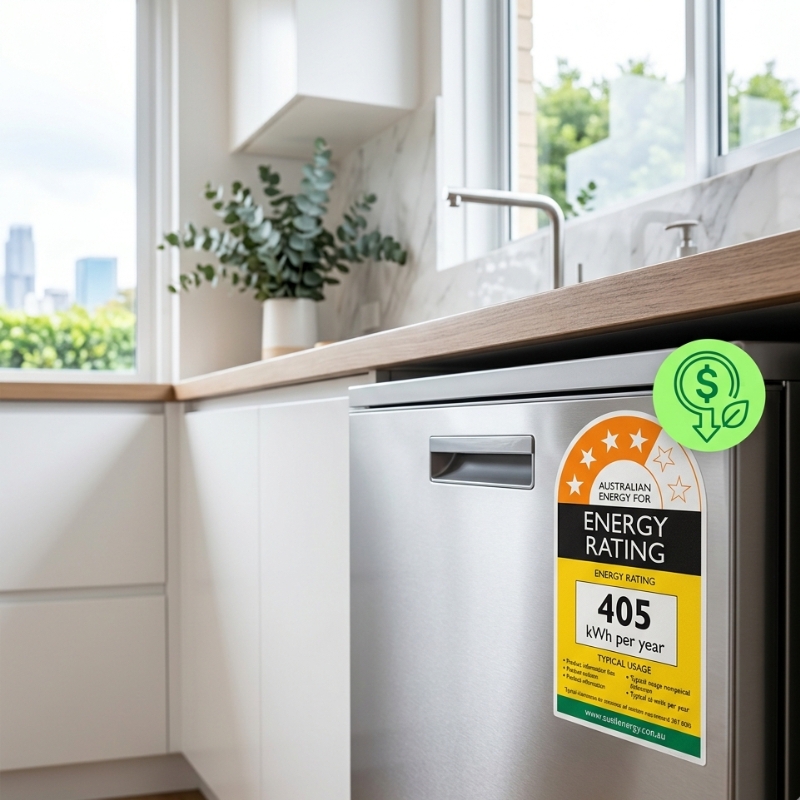
Rising electricity prices mean every new kitchen appliance is an opportunity to shave dollars off your quarterly bill. Yet many shoppers still walk past the yellow and red Energy Rating label without really understanding what the stars or kilowatt-hour figures tell them. This guide breaks down how the Australian Energy Star system works, why two similar-looking fridges can have very different running costs, and when paying more today can genuinely save you money tomorrow. We will also flag common pitfalls and provide appliance-specific tips so you can choose the right product for your home. If you are comparing models across several categories, our full kitchen appliances range shows the latest ratings side by side.
1. Why Energy Star Ratings Matter for Australian Households
Energy Star ratings give you a quick, government-regulated snapshot of how efficiently an appliance uses power. For households trying to keep living costs down, those stars translate directly into:
• Lower ongoing electricity bills – even a one-star difference on frequently-used appliances can save $50–$150 per year.
• Reduced greenhouse gas emissions – important for buyers who value sustainability.
• Longer appliance life in many cases – efficient compressors, inverter motors, and improved insulation often run cooler and experience less wear.
• Easier apples-to-apples comparison – the scheme is standardised nationally, so a five-star dishwasher in Perth is rated the same way as one in Brisbane.
Because kitchen appliances usually run daily (fridges all day, dishwashers several times a week, microwaves for quick meals), the Energy Rating label is one of the simplest ways to predict lifetime cost before you hand over your credit card.
2. How the Australian Energy Rating Label Works
Australia’s Energy Rating label is overseen by the federal government’s Energy Rating program, a joint initiative of the Commonwealth, states, and territories. Knowing how to read it turns a colourful sticker into a decision-making tool.
2.1 Understanding the Star Scale
• Stars range from 1 (least efficient) to 10 (most efficient).
• A higher star count means lower energy consumption compared with similar-sized models in the same category.
• Some categories cap out at 6 stars; super-efficient products can earn a “crown” of extra stars up to 10.
It is critical to compare stars only within the same appliance type and similar capacity range. A four-star oven cannot be directly compared with a four-star fridge.
2.2 Interpreting Kilowatt-Hour Numbers
Under the stars you will see an annual energy consumption figure in kilowatt-hours (kWh). This is laboratory-tested usage based on representative Australian household patterns. To convert that number into dollars:
- Check your electricity tariff (for many homes it is roughly 28–35 cents per kWh).
- Multiply the kWh figure by your tariff.
- The result is your estimated yearly running cost for that appliance.
Example: A 420-litre fridge rated at 330 kWh per year on a 30-cent tariff costs about $99 annually to run.
3. Factors That Affect an Appliance’s Star Rating
Star ratings are not only about clever engineering; several variables can bump the number up or down.
3.1 Size and Capacity
Larger fridges, ovens, and dishwashers logically consume more power. The scheme adjusts expectations based on volume, but tilt two models of vastly different capacities side by side and the bigger one may still cost more to run even if both show four stars.
3.2 Technology and Features
• Inverter compressors and brushless motors often boost efficiency in fridges and dishwashers.
• Better insulation and multi-layered door glazing reduce heat loss in ovens.
• LED lighting inside appliances draws less power than halogen bulbs.
• Smart energy modes can delay cycles until off-peak times, lowering tariff costs rather than energy use per se.
3.3 Usage Patterns
The label assumes average Australian use. If you load your dishwasher twice a day or open the fridge every 10 minutes during summer school holidays, real-world consumption will be higher. Conversely, single-person households may come in below test figures.
4. Quick Checklist Before You Buy
Not all efficiency gains come from reading labels. Run through these points in store or online to avoid surprises:
• Measure the cavity space in your kitchen carefully – poor airflow pushes compressors to work harder.
• Check climate classification on fridges (e.g., Tropical, Subtropical) if you live in a hot region.
• Compare noise levels; quieter usually means a smoother, more efficient motor.
• Consider user-selectable eco modes and delayed-start features on dishwashers and washing machines.
• Look for reversible doors to position fridges away from ovens or direct sun.
• Read customer reviews for real-world energy performance, especially in heatwaves.
5. Common Misconceptions and Mistakes to Avoid
Misunderstanding the label can nullify those shiny stars:
- Assuming more stars always cost less overall – a premium six-star fridge may take seven years to pay back the higher purchase price if your household is small.
- Ignoring capacity – families who buy an undersized fridge to chase higher stars often overfill it, which forces the compressor to run constantly and reduces lifespan.
- Forgetting standby power – microwaves with LED clocks, smart ovens, and Wi-Fi fridges still sip electricity when idle. Check the standby figures in the manual.
- Thinking Energy Star covers total environmental impact – it measures operational electricity only. Manufacturing footprint and end-of-life recyclability are separate issues.
- Believing stars are comparable across categories – you cannot compare a four-star fridge to a four-star air conditioner.
6. Higher Star Rating vs Lower Upfront Price: A Payback Snapshot
When budgets are tight, buyers often juggle sticker price against future savings. The table below shows how different star ratings can affect running costs for a standard 400–450 litre top-mount fridge.
| Situation | Approx. Annual kWh | Estimated Yearly Cost (30¢/kWh) | Five-Year Cost | Upfront Price Range | Typical Payback Period |
| 3-Star model | 460 | $138 | $690 | $850–$1,000 | N/A (cheapest upfront) |
| 4-Star model | 350 | $105 | $525 | $1,050–$1,250 | ~3 years |
| 5-Star model | 270 | $81 | $405 | $1,300–$1,600 | ~4 years |
| 6-Star model | 210 | $63 | $315 | $1,650–$2,000 | ~5.5 years |
The figures are illustrative averages, not brand-specific promises. They highlight how a four-star unit can recoup an extra $200 upfront after roughly three years, while a six-star model suits households expecting to keep the fridge for a decade or more.
7. Appliance-Specific Efficiency Tips
Efficiency gains vary across categories, so it pays to dig deeper.
7.1 Fridges and Freezers
• Allow ventilation space according to the manual, typically 50–100 mm on all sides.
• Defrost manual-defrost freezers before ice builds thicker than 1 cm.
• Keep the fridge between 3–4 °C and the freezer at –18 °C; lower settings waste power without improving food safety.
7.2 Dishwashers
• Look for soil sensors and half-load options to avoid unnecessary long cycles.
• Check water-efficiency ratings alongside Energy Star – you pay for hot water too.
• Clean filters monthly to maintain spray pressure and efficiency.
7.3 Ovens and Cooktops
• Fan-forced ovens often cook 10–20 °C lower than conventional units, trimming energy use.
• Induction cooktops are around 30 % more efficient than ceramic electric models and much faster to respond than gas.
• Keep oven door seals intact; a worn gasket leaks heat and makes the thermostat cycle more often.
7.4 Microwaves
• Inverter technology delivers consistent power instead of pulsing, so food cooks more evenly and can save energy on partial-power settings.
• Consider cavity size – a family-sized unit running for single meals wastes power.
For an in-depth look at microwave efficiency across different technologies, see our guide on energy-efficient microwave types.
8. When Energy Efficiency Savings Add Up: Real-World Scenarios
To see the practical payoff, let’s run two typical Australian household scenarios.
Scenario 1: New Family Home
• Purchases: 5-star 420 L fridge, 4-star dishwasher, induction cooktop, 4-star convection microwave.
• Combined annual saving over minimum-standard models: roughly $210.
• Over a 10-year appliance life, that is $2,100, enough to upgrade to a premium oven or offset moving costs down the track.
Scenario 2: Older Couple Downsizing
• Purchases: 3.5-star 300 L fridge, benchtop air fryer oven, two-burner induction cooktop.
• Smaller capacities mean lower absolute power use, even if stars are mid-range.
• Estimated annual running cost under $120 for all three appliances, compared with $190 for their previous larger, less efficient models.
9. Regulatory and Safety Notes
The Energy Rating program is backed by the Australian Government. Appliances must be tested in accredited laboratories under Australian and New Zealand Standard methodologies before labels are approved. You can verify model information or compare products on the official Energy Rating database.
10. Frequently Asked Questions
1. Do more stars always mean the appliance is better quality?
Not necessarily. Stars indicate energy efficiency, not build quality or durability. However, brands that invest in efficient compressors and insulation often use higher-grade components, which can improve longevity as a side benefit.
2. How many stars should I aim for if I plan to move in three years?
Look at payback periods. If the extra upfront outlay reposes in four or five years, a mid-tier option (for example, four stars instead of six) may make more financial sense during a short stay.
3. Why is my new five-star fridge using more power than expected?
Installation and usage habits can undermine lab ratings. Check ventilation gaps, thermostat settings, door seals, and how often the door is opened. Also, confirm the ambient room temperature is within the fridge’s climate class.
4. Can I trust the kWh number if I live in a very hot or very cold part of Australia?
The test uses a standard ambient temperature. Extremely hot climates might push real-world consumption higher, while cooler areas could use less. Consider choosing the next star level up if you live in Darwin, Cairns, or other tropical zones.
5. Is standby energy significant?
For fridges, it is negligible because the appliance is always running anyway. For infrequently used gadgets like microwave-air-fryer combos, standby draw can matter over a year. Switch them off at the wall if possible.
Final Thoughts
Energy Star ratings are more than a colourful sticker – they are a window into an appliance’s lifetime cost and environmental impact. By decoding the star count, understanding kilowatt-hour figures, and weighing them against your household size and cooking habits, you can avoid bill shock and choose products that pay dividends every quarter. If an appliance’s efficiency still feels confusing, comparing similar models side by side or reviewing the official Energy Rating database will usually clarify the picture. And remember, an informed decision today means fewer regrets when the next power bill arrives.