
Oil vs No-Oil Cooking: How It Changes Flavour, Crispiness, and Clean-Up

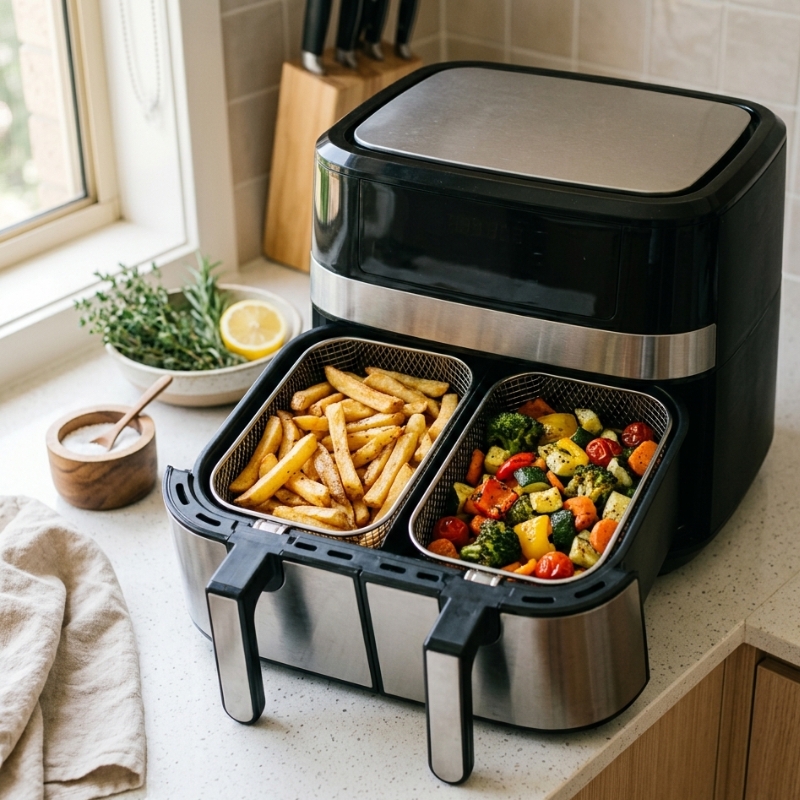
If you’re trying to cook lighter meals, cut down on mess, or simply make weeknight cooking easier with an air fryer, the “oil vs no oil” question comes up a lot. The truth is you don’t have to pick a side. Both approaches can produce excellent food—if the technique matches what you’re cooking.
Oil isn’t required for cooking. But it does change three big things:
• Flavour (including how seasoning sticks and how satisfying food tastes)
• Texture (especially crispness and browning)
• Clean-up (splatter, sticky residue, and lingering smells)
This guide explains what oil is actually doing, when skipping it works brilliantly, when a tiny amount helps, and how to avoid smoke, odours, and greasy build-up.
What oil actually does in cooking (in plain English)
Oil is a “helper” ingredient. It helps heat spread across the surface of food, encourages browning, carries flavours, and changes mouthfeel (that subtle richness that makes food feel less dry).
When you remove oil, you’re not “ruining” cooking—you’re changing the rules:
• Browning can be slower or less even
• Lean foods can dry out faster
• Crumbed/coated foods may be less crunchy
• Clean-up is often easier (less greasy film), but sticky sugars and starches can still bake on
Used well, oil-free cooking tastes fresh and clean. Used poorly, it can taste flat or feel dry. Used thoughtfully, a small amount of oil can give you better browning and crunch with minimal mess.
Flavour: why oil often makes food taste better
Even if you can’t explain it, oil changes how flavour “lands”.
Oil carries flavour and aroma
Many flavour compounds from spices, garlic, chilli, and herbs spread more evenly when there’s a little fat involved. That’s one reason a lightly dressed meal can taste more rounded than the same meal completely dry.
Oil helps the seasoning cling
Dry seasoning on a dry surface can fall off. A light spritz or a thin brush of oil helps rubs and spices stick so you get more flavour per bite.
Oil changes mouthfeel
A small amount of oil can make food feel less dry on the tongue. That doesn’t mean you need heaps—just that “zero oil” sometimes benefits from finishing touches like a sauce, salsa, yoghurt dressing, or a squeeze of lemon to keep things juicy.
A practical health angle (Australia)
If you’re aiming for healthier meals, “less oil” is often an easy win—especially when it helps you cook more at home and rely less on deep-fried takeaway. For general, plain-English guidance on healthier cooking approaches, this SA Health resource is a solid reference: healthy cooking methods
Texture: crispiness, browning, and why “no oil” sometimes disappoints
Texture is where oil-free vs oil-assisted cooking feels most different—especially if you’re chasing crunch.
Crispiness needs dryness first
Crisp surfaces are hard to achieve if the outside of your food is wet. Oil can’t fix wet.
For crunch without frying:
• Pat proteins and vegetables dry before seasoning
• Don’t overcrowd the basket/tray
• Give food space so steam can escape
• Flip, shake, or turn once or twice for even exposure
If food goes soggy, it’s almost always because moisture got trapped (crowding) or because the coating absorbed steam.
Browning: Why oil helps the “golden” look
Oil can speed up and even out surface browning. With no oil, browning can still happen, but you often need:
• A little more time
• Better spacing
• A drier surface
• A coating that isn’t clumping (crumb, seasoning, cornflour, etc.)
Coatings and crumbs: the oil-free challenge
Crumbed foods are where oil-free cooking can feel underwhelming, because traditional frying uses oil to:
• Brown crumbs evenly
• Create that “shattery” crunch
• Help crumbs set quickly
If you go fully oil-free with crumbed foods, you might end up with pale, dry crumbs. The fix usually isn’t “more oil”—it’s “smarter oil”:
• Lightly spritz the crumbed surface (don’t soak it)
• Brush a whisper-thin layer where the crumb looks dry
• Choose a crumb that browns well (panko often performs better than very fine crumbs)
When no-oil texture shines
Some foods genuinely don’t need oil for great results:
• Vegetables with natural sugars (capsicum, carrot, pumpkin)
• Sausages and fattier proteins (they render their own fat)
• Many frozen snacks are designed for oven-style cooking (often pre-oiled during processing)
• Skin-on chicken pieces (fat renders and helps crisp)
Clean-up: grease, residue, smells, and why “less oil” isn’t always “no mess”
Oil is a big driver of kitchen mess, but it’s not the only one.
Oil increases the grease film and odours
More oil often means:
• A greasy coating on baskets/trays
• Stronger lingering smells (especially fish, burgers, crumbed foods)
• More smoke risk if residue builds up over time
No oil can still create stuck-on gunk
Oil-free doesn’t automatically mean “self-cleaning”. Sugary marinades, honey-style sauces, and starchy coatings can bake onto surfaces and turn sticky.
Think of mess in two categories:
• Grease film: needs warm water, mild detergent, and wiping before it cools fully
• Sugars/starches: benefit from soaking to soften before washing
A simple clean-up routine that prevents build-up
After cooking (once safe to handle):
• Empty crumbs and drips
• Wipe surfaces with a paper towel to remove loose grease
• Wash with warm water + mild detergent and a soft sponge
• Dry properly before reassembling (reduces odour and residue)
If you cook fatty foods often, a quick wipe-down straight after use prevents the “brown sticky film” that becomes a nightmare later.
When to use oil (and how much)
You don’t need to “always” use oil or “never” use oil. Treat it like seasoning: use it deliberately.
Use a little oil when:
• You want crisp coatings (crumbs, schnitzels, nuggets)
• You’re cooking lean proteins that dry out easily (chicken breast, very lean patties)
• You’re roasting vegetables and want deeper browning
• Your spice rub tastes dusty instead of toasted
Skip oil when:
• You’re cooking fatty proteins (sausages, skin-on chicken, some fish)
• You’re reheating foods that already contain oil
• You’re cooking light meals where flavour comes from herbs, citrus, and seasoning
• You’re using sauces/dressings after cooking (they provide richness without needing oil in the cook)
“Just enough” oil: the practical rule
For most home meals, “just enough” looks like:
• A light spritz over the surface
• A thin brush layer
• 1–2 teaspoons tossed through a bowl of vegetables
• A teaspoon in a marinade to carry flavour (not a deep bath)
If oil is pooling at the bottom, it’s probably too much.
How to use less oil without sacrificing taste
Cutting down oil doesn’t have to mean eating bland food. These swaps keep meals satisfying:
• Use spices, garlic, and herbs more generously
• Add acid at the end (lemon juice or vinegar)
• Use yoghurt-based sauces, salsas, or chutneys for moisture
• Rest proteins after cooking so juices redistribute
• Avoid overcooking lean foods (dryness often gets blamed on “no oil”)
The biggest oil vs no-oil mistakes (and easy fixes)
Mistake 1: Using oil to fix sogginess
If food is soggy, it’s usually steamed and crowded.
Fix:
• Cook smaller batches
• Shake/turn midway
• Pat surfaces dry before cooking
Mistake 2: Going oil-free with crumbed foods and expecting deep-fried crunch
You can still get crunch, but the method needs adjusting.
Fix:
• Use panko crumbs
• Spritz lightly for even browning
• Cook until golden and crisp
Mistake 3: Drowning vegetables “because that’s what roasting is”
Roasting veg doesn’t need a lot of oil to taste good.
Fix:
• Toss with 1–2 teaspoons, not tablespoons
• Use spices and finish with lemon for lift
Mistake 4: Letting residue build up
Residue builds slowly until it suddenly smokes and sticks.
Fix:
• Quick wipe down after each use
• Occasional warm soak for stubborn residue
• Avoid harsh abrasives that damage non-stick coatings
Q&A: the questions people ask (and what actually works)
Is cooking without oil healthier?
Often, yes—especially if it helps you reduce deep-fried foods and cook more meals at home. But “healthier” also depends on the whole meal (veg, fibre, portion size, added sugar/salt, and how often you’re eating ultra-processed foods). A realistic approach is usually best: choose healthier cooking methods most of the time and use small amounts of oil when it meaningfully improves the result.
Do you need oil to get food crispy?
Not always. Many foods crisp well with heat, airflow, and dryness. Oil mainly helps with:
• More even browning
• Better crunch on crumbs/coatings
• A richer finish
A light spritz is often enough.
Why does food taste bland when I skip oil?
Usually one of these:
• Seasoning isn’t sticking
• Food isn’t browning as much (browning adds flavour)
• The meal is missing contrast (acid, herbs, heat, crunch)
Fix it by:
• Salting properly
• Using spices that toast well
• Finishing with lemon/vinegar and fresh herbs
• Adding a sauce for moisture instead of adding oil during cooking
Why does it smoke when I use oil?
Common causes:
• Too much oil pooling
• Old residue burning
• Drips landing on hot surfaces
Start with a deep clean, then reduce oil quantity. Most “mystery smoke” problems are either residue or too much oil.
Putting it all together: a simple decision guide
You want maximum crunch (crumbs, chips, schnitzel)
• Use a small amount of oil (spritz or brush)
• Don’t crowd
• Cook until golden and crisp
You want light, fresh meals (veg bowls, fish, tofu, reheats)
• Go oil-free or minimal oil
• Focus on drying and spacing
• Finish with herbs and citrus
You want easy clean-up on weeknights
• Use less oil overall
• Avoid sugary sauces directly on hot surfaces
• Wipe down after cooking so residue doesn’t build up
If you’re ready to put these ideas into practice at home, you can browse our air fryer range that suits your routine and cooking style.
Clean-up and odour control: keeping the kitchen from smelling like yesterday’s fish
Oil can intensify odours, but the bigger issue is the residue that bakes on over time.
Quick odour reset tips
• Wash removable parts promptly
• Wipe the interior once cool (damp cloth)
• Soak parts occasionally if smells linger
Prevent the sticky brown film
• Don’t let grease sit for days
• Clean more thoroughly after fatty foods
• Avoid damaging non-stick surfaces (damage can increase sticking)
If your household cooks often, easy cleaning is a practical must-have. To compare options that fit local kitchens and family meals, you can explore air fryer options for Aussie kitchens and choose a size that makes batch cooking easier.
FAQ
Is zero-oil cooking realistic for everyday meals?
Yes, for many meals—especially vegetables, reheating, and foods that already contain fat. For crumbed items and foods where you want deeper browning, a tiny amount of oil often gives a better result with very little added mess.
What’s the best way to apply a tiny amount of oil evenly?
A light spritz or silicone brush works well. The goal is a thin, even coating—no pooling.
Does oil make food cook faster?
It can help browning happen sooner and more evenly, which can feel like it’s “cooking faster”. But cook time still depends on thickness, moisture, and crowding.
Why does my coating look dry and patchy?
It usually needs either:
• Better adhesion (a binder like egg, yoghurt, or a light spritz), or
• More even spacing and turning during cooking
How do I stop chips and toast-like foods from going too dark?
Aim for golden rather than deep brown, and shake/turn during cooking so surfaces don’t over-colour.
If you want to make “less oil” cooking easier to repeat, capacity and basket shape matter—overcrowding is one of the biggest causes of soggy results. For a practical starting point, you can air fryer buying guide and pick a size that suits your household.