
Inverter vs Conventional Microwaves: What Actually Changes in Everyday Cooking?

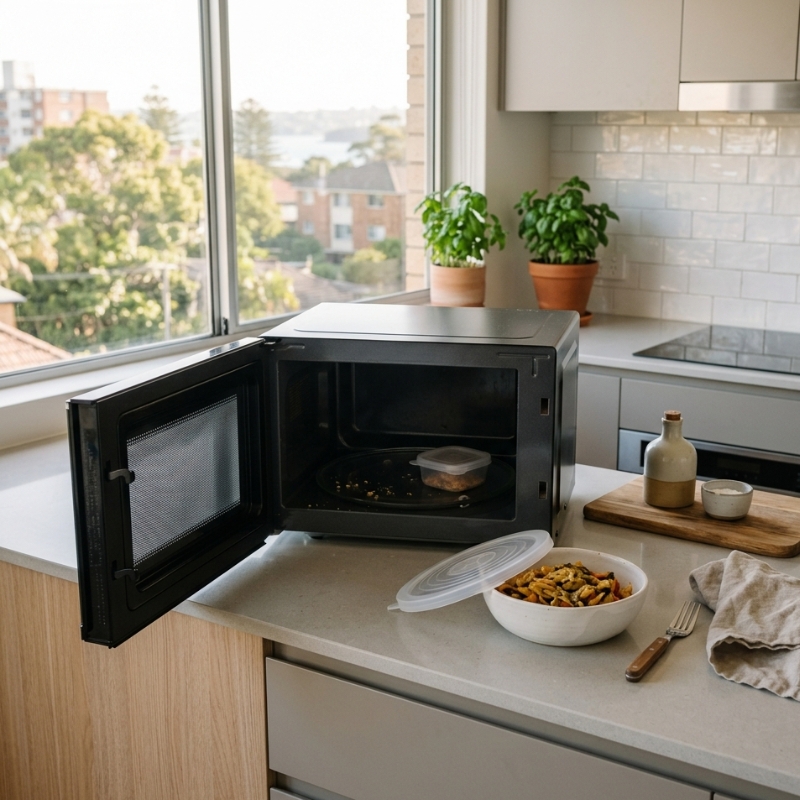
If you’ve ever set your microwave to “50% power” and still ended up with scorching hot edges and a cold middle, you’ve already felt the core difference this article is about.
In everyday terms, conventional microwaves often simulate lower power by cycling full power on and off. Inverter microwaves are designed to deliver a steadier, more consistent level of power, especially at lower settings. That one change can affect how food reheats, how meat defrosts, and how likely delicate foods are to split, curdle, or overcook on the outside.
This guide breaks down what changes (and what doesn’t) in real Sydney-kitchen scenarios: leftovers, frozen meals, meal prep, sauces, and defrosting.
How a microwave “power level” actually works
Microwave cooking is mostly about how energy is delivered over time.
Conventional microwaves: “pulsed” energy at low power
On many conventional models, choosing 50% power doesn’t mean the microwave is gently running at half strength the whole time. It often means the microwave runs at full power for a few seconds, then stops for a few seconds, repeating that pattern.
That can be fine for some jobs, but it can also create a common experience:
• the outside gets blasted during the “on” bursts
• the inside lags behind
• delicate ingredients cop the worst of it
Inverter microwaves: steadier energy delivery
Inverter technology aims to provide more continuous, controlled power at lower settings. Instead of “full blast then nothing,” it can deliver a more even stream of energy.
In daily cooking, this tends to matter most when you’re not using HIGH:
• defrosting
• gentle reheats
• melting chocolate or butter
• heating sauces, custards, or milk-based foods
Quick answer
If you mainly use HIGH for quick reheats, you might not notice a night-and-day difference. If you often defrost, cook gently, or reheat without ruining texture, the inverter can feel meaningfully different.
Every day cooking differences you can actually notice
Let’s get practical. Here’s where people commonly feel the difference.
1) Defrosting: less “cooked edges, frozen centre”
Defrosting is the poster child for inverter vs conventional.
With pulsed energy, the “on” bursts can start cooking thinner areas (edges of mince, corners of chicken) while thicker parts stay icy. A steadier low power can reduce that harsh start-stop effect.
To get better defrosting results on either type:
• use a lower power (often 30–40%)
• break food into smaller portions where possible
• flip/turn halfway
• use standing time (more on that soon)
2) Reheating leftovers: fewer rubbery bits, better texture
Ever reheated pasta and ended up with dried-out edges? Or found that rice goes hard on the sides, but the middle is lukewarm?
Inverter-style power control can help with gentler reheats, but you’ll still get the best results by using the technique:
• cover food (microwave-safe lid or vented cover) to trap steam
• stir halfway through if it’s a bowl meal
• add a splash of water to rice or pasta
• reduce power and increase time
If you want to browse models with different reheating features and auto programs, you can compare microwave features to see what matters for your cooking habits.
3) Melting chocolate and butter: fewer splits and scorched spots
Chocolate is famously fussy in a microwave because it can scorch in hot spots and seize quickly.
A steadier low power is helpful here, but technique still wins:
• use 20–30% power
• short bursts (10–20 seconds)
• stir between each burst (even if it doesn’t look melted yet)
• stop early; residual heat finishes the job
Butter is easier than chocolate, but it can still explode or separate at high power. Lower power reduces the “violent” heating that can happen during on/off pulsing.
4) Heating milk-based foods: less curdling, fewer boil-overs
If you regularly heat milk for coffee, warm baby bottles (follow safe feeding guidance), or reheat creamy soups, lower power control can help reduce sudden boil-overs.
Still, microwaves heat unevenly, so always:
• heat in short intervals
• stir well
• check temperature carefully before serving
5) Steaming vegetables: both can do it well
This one surprises people: for a lot of veg steaming jobs (covered bowl, splash of water), both types can perform similarly. The bigger factors are:
• container shape
• whether it’s covered
• quantity and cut size
• timing and standing time
Inverter isn’t automatically “better” here, though it can help when you’re doing lower-power cooking for more tenderness.
The thing most people miss: standing time is part of cooking
Microwaves don’t heat food perfectly evenly. That’s why many recipes include “stand for 1–3 minutes” after heating. During standing time:
• heat continues to spread through the food
• hot spots calm down
• the centre catches up
This matters whether you have an inverter or a conventional. In fact, standing time can be the difference between “cold centre” and “evenly hot” more than the technology itself.
A simple Sydney-weeknight habit that helps:
• reheat for a bit less than you think
• stand covered for 1–2 minutes
• stir and check
• add a short top-up if needed
What doesn’t change (inverter isn’t magic)
It’s useful to be blunt about what the inverter doesn’t solve.
Hot spots still exist
Microwaves bounce around inside the cavity, interacting with food density, water content, container shape, and where the food sits. You’ll still get hot spots.
That’s why:
• stirring
• rotating/turning
• arranging food evenly
• covering
still matter.
Container choice still matters a lot
Shallow, wide containers reheat more evenly than tall, narrow ones for many meals.
Also:
• avoid metal
• avoid cracked dishes
• use microwave-safe plastics/glass
• vent covers to reduce pressure
Wattage still matters
A higher-watt microwave can heat faster, but “faster” isn’t always “better.” For gentle heating, you’ll still want to use lower power and more time.
A simple decision guide: which type suits your cooking style?
Instead of thinking “inverter is better,” think “inverter is better for these behaviours.”
An inverter may suit you if you often:
• defrost meat or bread
• reheat leftovers and care about texture
• melt chocolate/butter often
• heat sauces, custards, or dairy-based dishes
• cook at a lower power to avoid overcooking
Conventional may be perfectly fine if you mostly:
• reheat single-serve meals quickly
• use HIGH almost all the time
• don’t defrost often (or you’re happy to manage it with technique)
• prefer a simpler set-and-go approach
If you’re not sure what size and style fits your space (especially in Sydney apartments where bench space is tight), it can help to find a microwave that fits your typical dish sizes and where it will actually live.
Real-world cooking playbook: better results on either microwave
Here are practical settings and habits you can use immediately.
Reheating pasta (no dry edges)
• Use 60–70% power
• Add a splash of water and cover
• Stir halfway
• Stand for 1 minute covered
Reheating rice (no crunchy bits)
• Sprinkle 1–2 teaspoons of water per cup
• Cover
• Use 60% power and a bit longer
• Fluff and stand
Defrosting mince
• Use 30–40% power
• Break into smaller chunks if possible
• Flip and separate as it softens
• Stand for a few minutes before cooking
Softening butter (without a puddle)
• Use 20–30% power
• 10-second bursts
• Turn the butter on its side for more even warming
Melting chocolate
• 20–30% power
• Short bursts, stir every time
• Stop early; let residual heat finish
Heating soup evenly
• Use a wide bowl if possible
• Cover with a vent
• Heat in intervals and stir well
• Stand for 1 minute, then check
Q&A: “If the inverter is steadier, why do I still need to stir?”
Because microwaves don’t heat like an oven or stovetop. The energy interacts with food unevenly based on shape, density, and moisture. An inverter can reduce harsh pulsing at low power, but it doesn’t remove physics. Stirring is still the cheapest “upgrade” you can do.
Safety: What to watch for in any microwave
Microwave issues are usually rare, but when they happen, you want to be cautious.
Stop using the microwave if you notice:
• repeated sparking/arcing (not just a one-off from a twist-tie you missed)
• burning smell
• smoke
• a damaged door, seal, or latch
• the unit tripping the circuit repeatedly
If there’s a small fire or you see arcing, the safest approach is to switch it off at the power point if it’s safe to do so, and follow recognised local safety guidance. Fire and Rescue NSW has practical microwave fire safety advice you can read here: microwave oven fire safety.
Choosing features that matter more than “inverter vs not”
Sometimes shoppers focus so hard on the inverter that they miss bigger day-to-day wins.
Size and interior shape
Ask:
• Will my dinner plates fit?
• Will a standard casserole dish fit?
• Do I reheat tall bowls often?
Turntable vs flatbed
A turntable can help average out hot spots. Flatbed designs can be easier for larger dishes, but results vary by model.
Auto programs and sensors
Good sensor reheat features can reduce guesswork for leftovers and steam-heavy foods. Bad ones are basically marketing. Reviews and real-user feedback tend to reveal whether sensors are genuinely useful.
If you want a quick scan of different styles (compact, mid-size, larger cavities), you can explore microwave options and shortlist based on space, wattage, and the features you’ll actually use.
Q&A: “Are inverter microwaves cheaper to run?”
Often, not by a meaningful amount. Running cost depends on wattage, how long you use it, and your electricity rate. Inverter can help you cook certain things more efficiently or avoid re-dos, but it’s not a guarantee of lower bills.
A more practical question is: will it help you get the results you want with less fuss?
Q&A: “Do inverter microwaves cook faster?”
Sometimes they can feel faster or more consistent at certain settings, but “faster” isn’t the main benefit people notice. The bigger difference is usually gentler, steadier heating at lower power, which can improve texture.
FAQs
Do I need an inverter microwave for reheating leftovers?
Not strictly. You can get excellent leftover results with either type by lowering the power, covering the food, stirring, and using standing time. An inverter can make gentle reheats easier and more consistent, especially for larger bowls or fussier foods.
Is inverter better for defrosting meat?
Often, yes—because steadier low power can reduce the “cooked edges, frozen centre” problem. But you’ll still need to flip, separate, and allow standing time.
Why does my microwave sound like it’s turning on and off?
That’s usually conventional power cycling at lower power settings. It’s normal behaviour on many models.
Will the inverter stop hot spots completely?
No. Hot spots come from how microwaves interact with food and the cavity. An inverter can reduce harsh pulsing at low power, but stirring, rotating, and container choice still matter.
What power level should I use for delicate foods?
As a starting point:
• chocolate/butter: 20–30%
• defrosting: 30–40%
• gentle reheats (creamy foods): 50–70%
Adjust based on your microwave wattage and portion size.
Is it worth paying extra for an inverter?
It’s most worth it if you frequently defrost, reheat gently, or cook foods that punish pulsed power (dairy, sauces, delicate melts). If you mainly press HIGH for quick zaps, you might prioritise size, reliability, and useful auto programs instead.